Ocio Responsable (Responsible Leisure) App
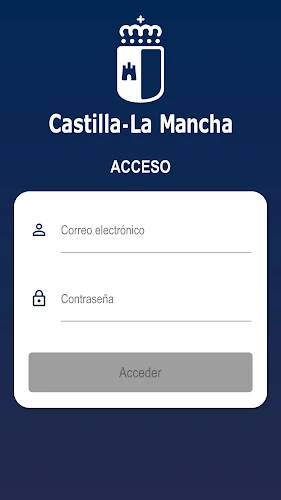
Castilla-La Mancha is forcing the hospitality industry to register customers identified with a QR code via the “Ocio Responsable” (Responsible Leisure) application before they can enter the premises.
Official context of the measure
Regional Vice-President José Luis Martínez Guijarro has stated that the use of this application will be mandatory under the new decree of measures to combat the pandemic, aimed at prevention and containment in hospitality establishments.
The Regional Government assures that the use of this digital tool “will allow monitoring with absolute data confidentiality.” To promote the application, a campaign aimed at young people has been launched, along with a mass SMS blast to citizens in the region.
How does it work?
- The owner of the establishment (bar or restaurant) installs “Ocio Responsable in CLM” on their phone.
- The owner registers their venue with the JCCM.
- The customer does not need to have the app themselves, but they must obtain their QR code —or mark of the beast— on the “Responsible Leisure” website.
- The Regional Government sends the QR code to the customer’s mobile phone via SMS.
- Upon entering, the establishment asks the customer for the QR code and scans it with the app; without a QR code, they cannot enter.
- The app forwards the data to the Regional Government, which keeps us under control like in an Orwellian novel.
- Anyone who fails to comply gets a fine.
Since when has it been in effect?
It started operating on February 12, 20211, but they didn’t wait even a day before postponing its mandatory enforcement by a month2, due to the huge backlash and the numerous bugs reported by users and hospitality workers. (Note: The original announcement of the app for nightlife was made back in August 2020).
Advantages, drawbacks, and major controversy
For contact tracers, on paper, it will be easier to locate the contacts of someone infected with SARS-CoV-2. However, there are numerous downsides, loopholes, and widespread social resistance:
- Privacy violations and legal doubts: It has been repeatedly denounced that requiring a technological “safe-conduct pass” encroaches on privacy and the right to free movement. The Centro Mancha Business Association (ASECEM) went to court requesting a temporary suspension, arguing that it discriminates against those without technological means. The High Court of Justice of Castilla-La Mancha (TSJCM) denied the suspension, arguing it was not “the most harmful measure” for the hospitality sector, but it did admit the appeal for consideration over the alleged violation of fundamental rights.
- Tech blunders: Politicians and users quickly demonstrated that the system lacked the necessary security. It became public knowledge that the platform allowed registering QR codes with fake names and completely made-up phone numbers, rendering the supposed “tracing” and outbreak monitoring utterly useless.
- Unbearable burdens for the hospitality sector: It forces waiters and bar owners to act as “health police” by scanning codes at the door, adding an unreasonable workload to a sector already battered economically by restrictions.
- Stigmatisation of the sector: It indirectly attributes outbreaks to leisure venues that may have actually occurred elsewhere or in situations where no similar control is required.
- Digital divide: Anyone without a smartphone or internet skills cannot enter an establishment. This effectively discriminates against and socially isolates a large portion of the elderly.
Image credits
The image ocio-responsable-login.webp is a screenshot of the “Ocio Responsable” mobile application and is the property of the Regional Government of Castilla-La Mancha. It is used in this article for informational and critical purposes, under the right of quotation established in Article 32 of the Spanish Intellectual Property Law.
References
D.O.C.M., Resolution of 11/02/2021, from the Ministry of Health, on prevention and containment measures for the COVID-19 coronavirus in bars, restaurants, and other hospitality establishments. ↩︎
Resolution of 12/02/2021, from the Ministry of Health, on the effectiveness of the Resolution of 11/02/2021, on prevention and containment measures for the COVID-19 coronavirus in bars, restaurants, and other hospitality establishments. ↩︎